Various Thoughts on How Blind People Might See
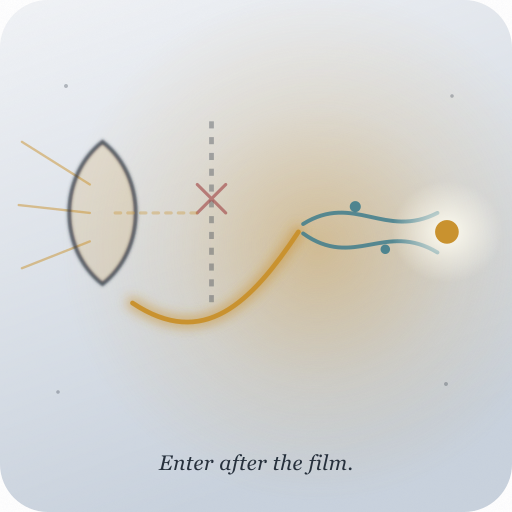
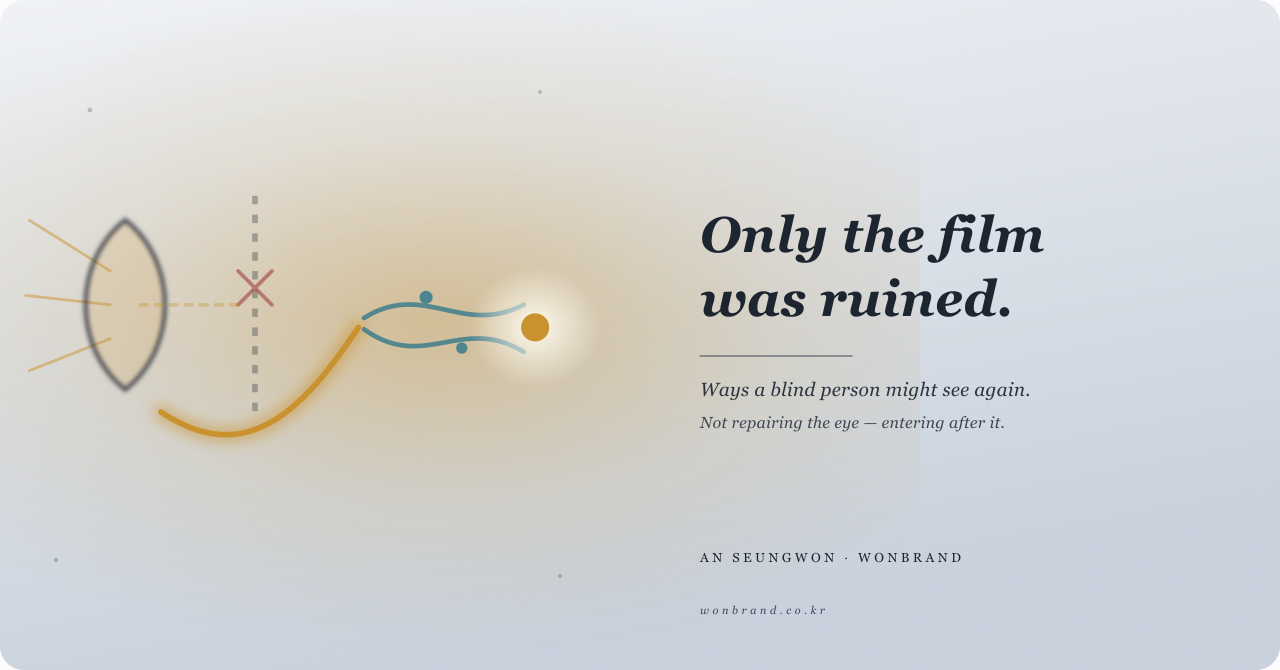
Where is the bone conduction of vision? Enter at the stage right after the ruined film.
What a bone conduction earphone tells us
A bone conduction earphone rests on the cheekbone and rings the cochlea directly, skipping the outer ear, the eardrum and the three small bones. From the cochlea onward it changes nothing, so the brain receives the same signal by the same road as always and there is nothing to learn — unlike devices that turn sound into vibration on your back, which take months to master. The essay's opening question is whether vision has such a place: somewhere you can skip only the front end and let the rest work as it always did.
A camera with only the film ruined
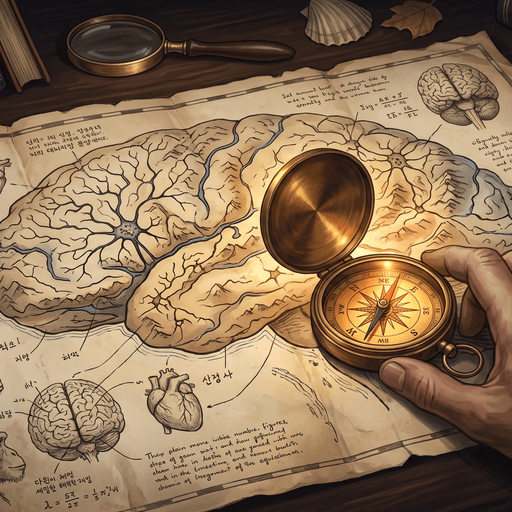
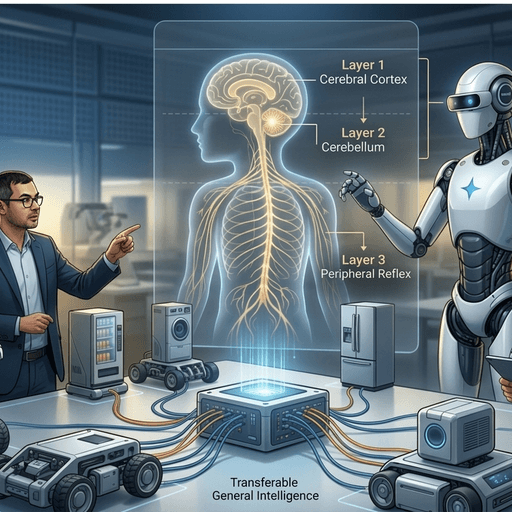
In retinitis pigmentosa and macular degeneration the photoreceptors die — the film is ruined — but the ganglion cells, the optic nerve, the lateral geniculate nucleus, the visual cortex and the face circuit are mostly alive. Most blind people, in this reading, are cameras with only the film ruined: the lens is fine, the wiring is fine, the darkroom is fine, so you enter at the stage right after the film. And once you are in, the brain's own fusiform face area does the recognising — which is why the goal is to supply raw material rather than a coded name tag that says "three metallic beats means mother."
Not one door but several
The bone conduction of vision turns out not to be a single thing: which door you go through depends on what is broken. The essay lays out four — the inner retina reached electrically from the surface of the eye (covering the majority of blindness), the optic chiasm approached through the sphenoid sinus, the hollow behind the nose that sits millimetres away and offers a position inside the skull without opening it, the lateral geniculate nucleus and visual cortex, and the side road to the superior colliculus that carries about ten percent of optic nerve fibres. Each skips a different amount of the pathway and serves a different group of people.
The interference brush
Nerve cells ignore signals past a few hundred cycles per second, so a current at 2,000 Hz and another at 2,010 Hz both pass unnoticed — except where they overlap, where interference produces a slow 10 Hz beat the nerves do answer, like two flashlights bright only at their crossing. Because changing the ratio of current moves that crossing point by switching alone, you can sweep it and draw, the way one electron beam swept an old cathode ray television: a handful of electrodes instead of one implanted electrode per pixel. The principle was published in 2017 with mouse experiments and has never been applied to vision, and one question decides its fate — how small the crossing point can be made — which an electric field calculation on a head model could answer before anything touches a person.
The screen is already on
In Charles Bonnet syndrome, people who have lost their sight see vivid, detailed apparitions — faces, patterns, buildings — because a visual cortex starved of input begins generating imagery on its own. Read backwards, that means the image generator in a blind person's brain is still running and the screen is still on; they simply cannot steer it. Just as an alarm clock gets absorbed into a dream, a faint cue slipped in as an apparition begins might nudge its content — far less force than building a picture from nothing — yet medicine has treated the syndrome only as a symptom to suppress.
Let the visible person broadcast their face
This project began as an inversion of the invisible person device, where the person who can be seen emits a signal that erases them from others' awareness; inverted properly, the emitter is still the visible person, now inserting themselves into a blind person's awareness. A badge, a phone, a marker on a lapel — switched on and sent by the person themselves — makes consent structural, removes the camera along with the darkness and privacy problems, and dissolves the pixel problem entirely. The essay notes that assistive technology assumes the disabled person carries the whole burden, while tactile paving, braille buttons and audible crossings all worked the other way: the environment emits the signal.
Insights
Learn more