In the Age of AI, Is It Justifiable to Bind Children to Middle and High School Education?
After elementary school, education should become a pathway, not an obligation
School Was the Right Answer for One Era
In an era when many could not read and when factories and organizations needed standardized humans, school was a powerful institution that lifted everyone above a minimum level. Elementary school still has meaning as the basic operating system of a human being.
After Middle School, Children Begin to Diverge
Some children come alive in books, some through their hands, some on a stage, some in a shop, some on the field. To evaluate them all by the same classroom and same test is not a measure of inadequacy — it is a mismatch of place.
Credentials Were the ID Card of the Parent Generation
A diploma from a good school was a compressed file from an era when verifying a person directly was difficult. In the age of AI, the new ID card is no longer a school name but what one can build — output and questions.
AI Has Changed the Meaning of Study
AI explains, re-explains, and explains differently. Humans can no longer outpace AI in sheer volume of study. Education must move from memorization to questions, from correct answers to exploration, from grades to output.
School Can Give Friends, but It Can Also Leave Scars
Relationships after middle school carry hierarchy, popularity, appearance, grades, and group dynamics. For some, school is not where they learned social skills but where they first learned how to avoid people. A forced group does not always grow a person.
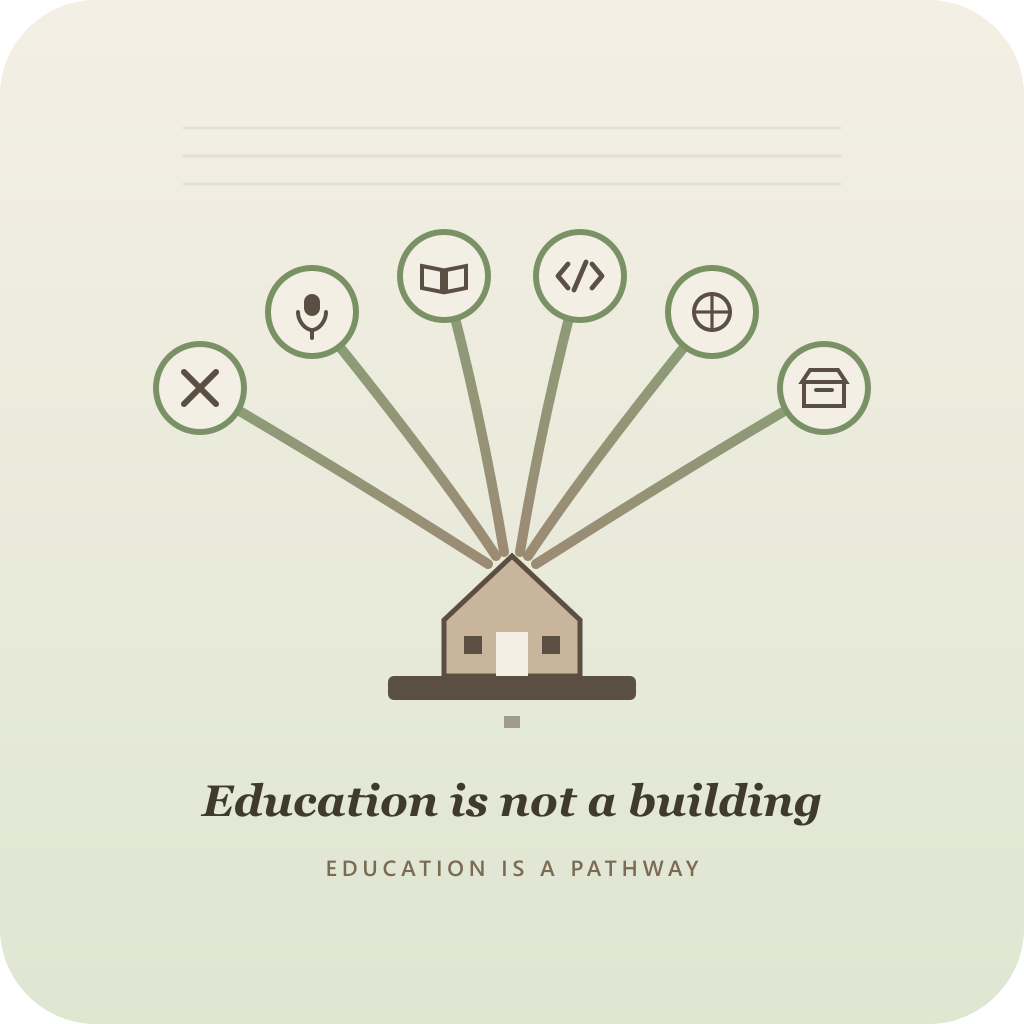
Education Is Not a Building, but a Pathway
Future education should not be one building but many doors — AI self-exploration, apprenticeship, entrepreneurship, arts and sports, content, field practice. If the purpose of raising a child is not to hold on but to let go, the purpose of education is the same.
Insights
Learn more