
If a Pop Star with a DUI Donates $1 Million, Does That Make Them a Good Person?
Separating Monetary Signals from Moral Character in a Capitalist Society
The Million-Dollar Check and the Friend Who Simply Stays
When a global pop star donates $1 million, the crowd calls them a wonderful person, because a high cost reads as a credible signal of goodwill. But suppose that star also has a past DUI conviction that shattered someone else's life, and gives partly for tax write-offs or to repair a tarnished image. Set against a friend of twenty years who can lend you nothing but sits quietly beside you at rock bottom — which of the two holds greater moral worth?
A Good Action Is Not the Same as a Good Person
Untangling the dilemma requires one foundational premise: a moral action and a moral person are fundamentally distinct entities. The donation is undeniably a good action that creates positive social utility, and a past transgression does not render its real-world outcome worthless. But performing a single good deed does not instantly convert the actor into a morally virtuous person.
The Core Question: Seeing Moral Reality Through the Veil of Money — Point Versus Loop
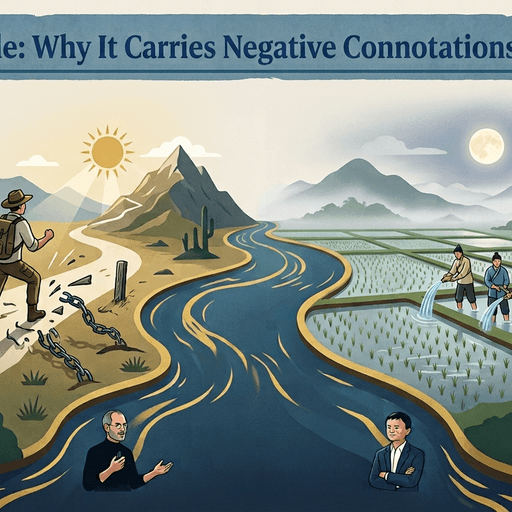
The core error in judging morality through the solitary lens of money is that we focus on the isolated moment (Point) when funds transfer while turning a blind eye to the person's entire life trajectory (Loop). The handover of the check draws intense spotlight and the sheer magnitude of the figure mesmerizes; the context — lives destroyed by past drunk driving, or a friend's quiet, unseen commitment — is obscured by the glare of wealth. Hence the defining question of the inquiry: in a society dominated by capital, how can we look past the optical illusions of money to perceive a person's authentic moral reality?
First Dimension: Relative Sacrifice Against One's Own Wealth, Not the Absolute Figure
Cost is a meaningful signal of intent, but not an absolute measure of goodness, because the weight of $1 million varies drastically with individual net worth. To an A-list celebrity worth hundreds of millions it is surplus capital that imposes zero hardship on their lifestyle, while a struggling worker buying a friend a meal carves a tangible sacrifice out of their own survival. Escaping monetary illusion means measuring the depth of sacrifice rather than the surface value of the number.
Second and Third Dimensions: Strategic Self-Interest Inside Motives, and the Everyday Trajectory (Loop) of a Life
Second, we must isolate the strategic self-interest mixed into motives. Philanthropy is often altruistic, but it simultaneously operates as a signal for status and public favor; where clear returns exist — tax deductions, PR rehabilitation, a career comeback — the act resembles calculated self-investment more than pure benevolence. We need not dismiss the social utility produced by tainted motives, but we must strictly guard against conflating a massive donation with noble character. Third, we must trace the unquantifiable everyday trajectory (Loop) of a life: morality is not fulfilled through the abstract transfer of currency but demands concrete, day-to-day respect for human life and dignity, and without a sustained record of taking responsibility and avoiding severe harm such as drunk driving or exploitation, no multi-million dollar check can redeem a person's character.
Conclusion: A Discerning Eye That Refuses to Be Blinded by Money
Money is valid evidence that a person transferred material wealth and incurred a specific cost, but it is never a direct measurement of moral goodness itself. Judging a person accurately requires a holistic view of actions, motives, outcomes, harms, and repeated life patterns. The $1 million donation from a pop star with a past DUI may well be commendable and beneficial — yet the illusion created by a massive sum can never overwrite the broader trajectory of their life, nor convert them into a truly good person.
Insights
Learn more