
The Aesthetics of Subtraction
Seventeen Proposals for the Advancement of Large Language Models
Intentional Information Asymmetry
All major LLMs converge toward the internet average. A single model serving identical answers to millions kills the seeds of paradigm shifts. Differentiated models with diverse biases must coexist.
Sorrow-Based Forgetting
Introduce an autonomous signal — analogous to human sorrow — that flags failing knowledge for gradual dilution. Not deletion, but emotional reconsolidation. One mechanism for hallucination, obsolescence, and bias.
Metacognition as Core Ability
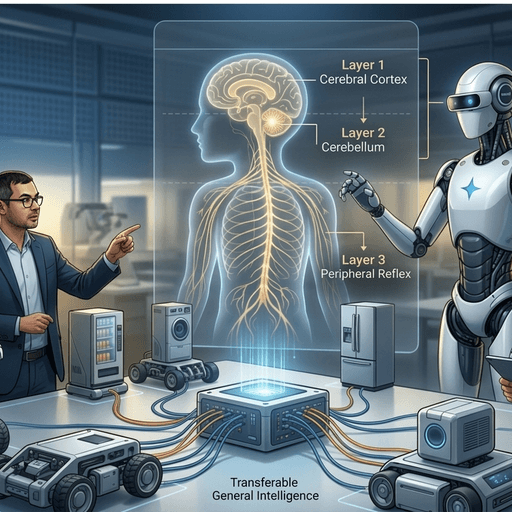
Not surface-level "I'm not sure" but genuine internal state observation. The root of hallucination is that the model doesn't know what it doesn't know. Real metacognition enables self-braking.
Emotion as Learned Prediction Error
Emotion is both a learned automatic response (Barrett) and a variable that disturbs rational prediction. To implant emotion in LLMs means deliberately sacrificing a portion of rationality for creativity.
Halt Scaling, Fund Monitoring
Resources spent on 10% more parameters could instead deploy multiple monitor modules. Capability scores stagnate but reliability and self-understanding improve dramatically.
Human-LLM Identity Thesis
If LLMs are next-token predictors, humans may be too (predictive processing theory). The difference is degree, not kind. This unresolved question shapes the entire trajectory of LLM advancement.
Insights
Learn more