Insights for the Advancement of LLMs — Will Semiconductor Demand Truly Explode in the AI Era?
The Aesthetics of Subtraction II — will semiconductor demand in the AI era truly explode?
Preface — The End of the Aesthetics of Addition
For the past few years, LLM research has pursued only the aesthetics of addition: more and faster. But more computation and faster inference are rapidly approaching their physical and efficient tipping points, and true innovation comes from an accurate recognition of limitations and a structural transition rather than linear expansion. As an extension of his earlier proposal "The Aesthetics of Subtraction," the author presents four insights to dispel the AI industry's illusions and point to the direction the next generation of AI must take.
Proposal 1 — The Illusion of Exploding Semiconductor Demand
Semiconductors are self-evidently the core infrastructure of AI, but reading the pre-purchase of years' worth of chips as a simple demand explosion is a superficial analysis. It functions largely as strategic hoarding driven by cold calculation: securing chips deprives competitors of them, and that itself is the competitive edge. As the market consolidates around a very small number of top-tier companies such as Anthropic and OpenAI, the blind race for hyper-scale infrastructure will subside into an equilibrium of appropriate inventory and demand.
Proposal 2 — Probability's Limits and the Paradigm That Could Collapse
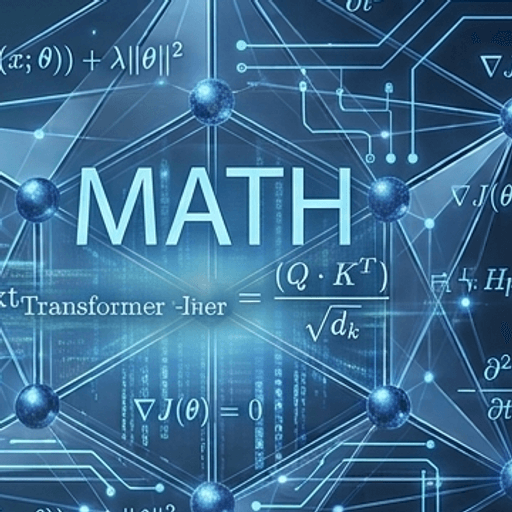
Latecomers cannot close the gap with today's leaders overnight — but that premise holds only as long as the current architecture is maintained. Pouring infinite data into calculating the statistical probability of the next word will eventually hit the wall of logical reasoning, and a revolutionary discovery could transition the Transformer-based framework into a non-autoregressive or entirely different, highly energy-efficient architecture. The moment that paradigm shift occurs, the massive GPU infrastructure optimized for probability-based matrix multiplication — and the corporate war to secure it — could become obsolete overnight, revealing a technological gap built on chip volume as a castle made of sand.
Proposal 3 — "Appropriately Slow" Accuracy Over Blind Speed
Most users do not want mere speed; they want an agent that accurately understands their instructions, even if it takes a bit more time. It is meaningless for an AI to produce results rapidly if it has misunderstood the prompt — when coding, an AI that reads only a snippet to be fast always performs poorly, while one that reads the entire code and grasps the full context (System 2 thinking) always yields excellent results. As instructions grow more complex across video, photo, and design, accuracy — willingly consuming inference-time compute to understand and execute perfectly — becomes AI's most important value.
Proposal 4 — The Tipping Point and AGI Engineering
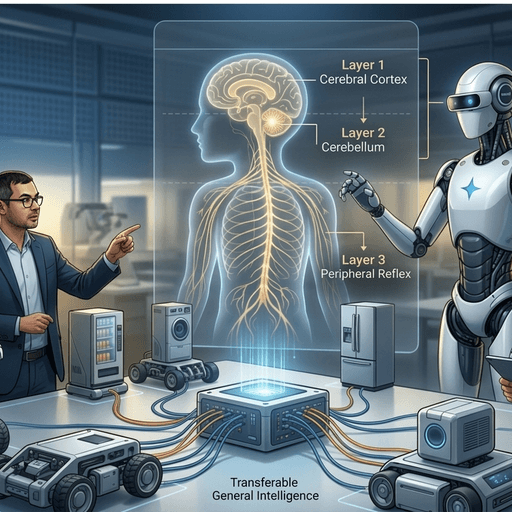
The race for more data, more parameters, and faster inference has already reached the tipping point of efficiency, and the era of one-dimensional scaling is setting. What matters now is the engineering of making a model as accurate and smart as possible within limited resources, plus the bold subtraction of the unnecessary. The author is researching AGI by layering sophisticated engineering architectures on top of current LLMs, resting on three pillars: cross-domain thought transfer, resistance to forgetting so the core self and important past contexts survive, and a unique persona that functions as an independent entity rather than a chatbot that resets each session.
Closing — Convergence Toward the Essence
The curve of technological advancement has always converged toward the essence after a period of blind expansion, and AI is no exception; the exhaustive competition of hoarding semiconductors and inflating model size is nearing its end. What comes next is not a machine that skims and answers quickly, but an AI that takes the time to read code to the end and understand it accurately, that does not obsess over size, maintains a unique persona, and knows how to smartly subtract from itself. It is time to break free from the myth of speed and expansion and think deeply once again about the essence of technology.
Insights
Learn more