Unstoppable: Why It Carries Negative Connotations in the East
East-West Cultural Differences in the Perception of the Uncontrollable
A Word of Praise, a Word of Warning — and a Club Election
Also the title of a signature Sia hit, "unstoppable" is the ultimate compliment in the West, yet in the East the nuance of being beyond control often evokes caution and risk. The author recalls a presidential election for the volunteer club at a foreign language high school, where a transfer student from the United States canvassed members one by one and, when the campaign stalled, demanded that the author yield the post. Peers dismissed such students as overstepping their bounds and the author simply felt frustrated, but looking back the author recognizes having operated inside the same implicit Eastern framework that prizes restrained self-regulation and humility above all.
Rice Paddies and Frontiers: Where the Two Selves Came From
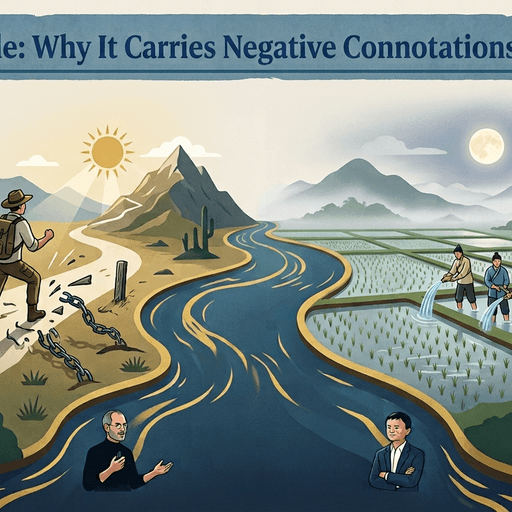
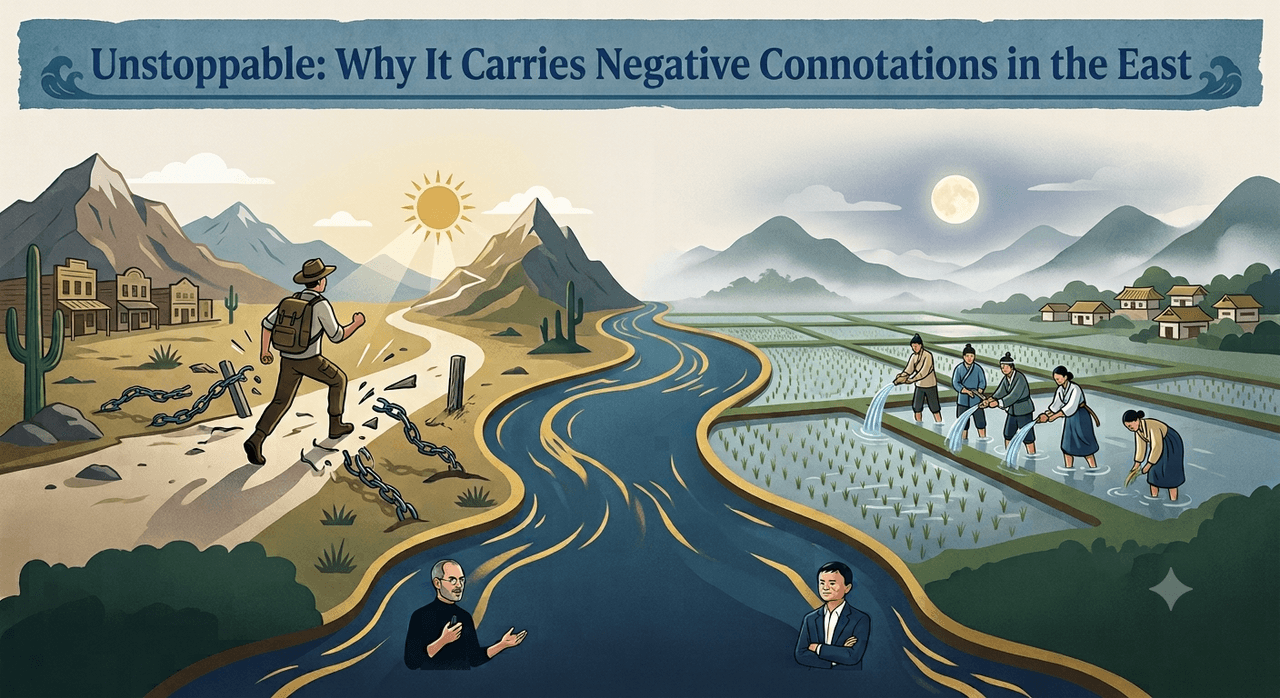
In The Geography of Thought, cultural psychologist Richard Nisbett traces East-West cognitive differences to historical modes of subsistence and philosophical roots. Paddy-rice farming demanded communal coordination of water, so one person acting out of turn could ruin a village's harvest; humility — "the riper the rice, the lower it bends" — and self-control became survival strategies, and with Confucian and Taoist thought the self was defined as interdependent. The West grew around herding, seafaring and frontier exploration, where clinging to custom meant stagnation; Greek philosophy and Christian tradition cast the human being as an independent self, and momentum that pierces constraints was celebrated as heroic breakthrough.
Descartes and Nietzsche Versus the Human Being as "Between People"
The historical divide is then reinterpreted philosophically. In the West the human being is the Cartesian subject, separate from environment and others, whose worth is completed by breaking through limits and control; to be unstoppable is to embody the Dionysian energy that, in Nietzsche's terms, resists Apollonian order to create new values. In the East the word for human being, 人間, literally means "between people": the self is relational, and in Taoist Wu Wei, the Confucian Middle Way and the image of water that does not contend (上善若水), the highest order is harmony rather than headlong force. An unstoppable force that breaks relational balance is therefore felt as a threat to the very ground of one's existence.
Self-Promotion and Nerd Culture: Steve Jobs and Jack Ma
Western business runs on low-context communication, so Eastern modesty such as "I am lacking, but I will do my best" is often misread as a lack of confidence or competence. In Silicon Valley even a brilliant engineer cannot lead without the ability to pitch forcefully, which is why Steve Jobs's self-promotion and passion, more than Steve Wozniak's engineering, shaped the industry. Eastern traditions, guided by the ideal of hidden merit and the belief that wealth is safest when discreet, instinctively distrust overt self-promotion. When Jack Ma publicly criticized state financial regulators, Ant Group's record IPO was halted and he lost control of the company — a sign of the backlash an unstoppable display of individual influence can provoke in the East.
Business Negotiation and Organizational Communication
In the Western corporate lexicon, Assertive, Disruptive and Ambition are words of praise that signal agency against the status quo, and openly challenging a superior or company policy in a meeting is valued as passion and contribution. Explicit contracts, a direct "No", flat debate and efficiency come first. In Eastern business culture the same words can read as self-righteous, disruptive of order or damaging to face. Business that values hierarchy and face softens refusal into "We will give it careful consideration" and builds guanxi and trust over meals and drinks before the contract itself, because mutual restraint and stability within relationships matter more than individual efficiency.
Is Control an Oppression or the Order That Protects a Community?
Wittgenstein held that the limits of my language mean the limits of my world, and the divergent receptions of "unstoppable" reveal the ontological worldviews two civilizations have built. The divide rests on whether control is an oppression that confines the individual or the minimal order that protects the community. Ranking one culture above the other is meaningless: the Western drive to break through obstacles and the Eastern restraint and humility that flow in harmony with others are two useful tools for living, and pairing the flexibility to blend with others with the resolve to break through at decisive moments yields a perspective rich in both achievement and balance.
Insights
Learn more