Why Do You Put on a Suit Every Morning?
A Standardized Civilization: The Functional Rationalization and Internalized Coloniality of the Western Suit
The Three Justifications: The 'Global OS' Logic
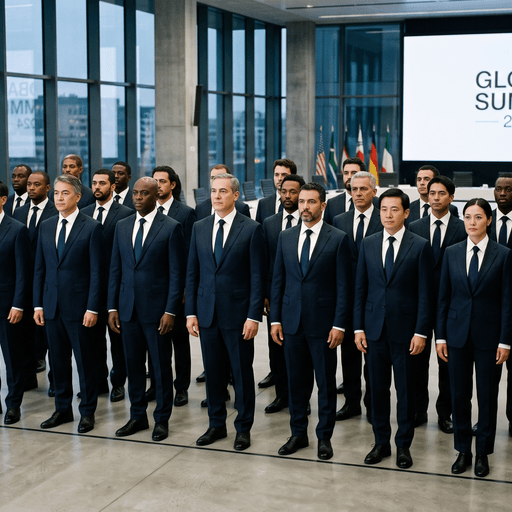
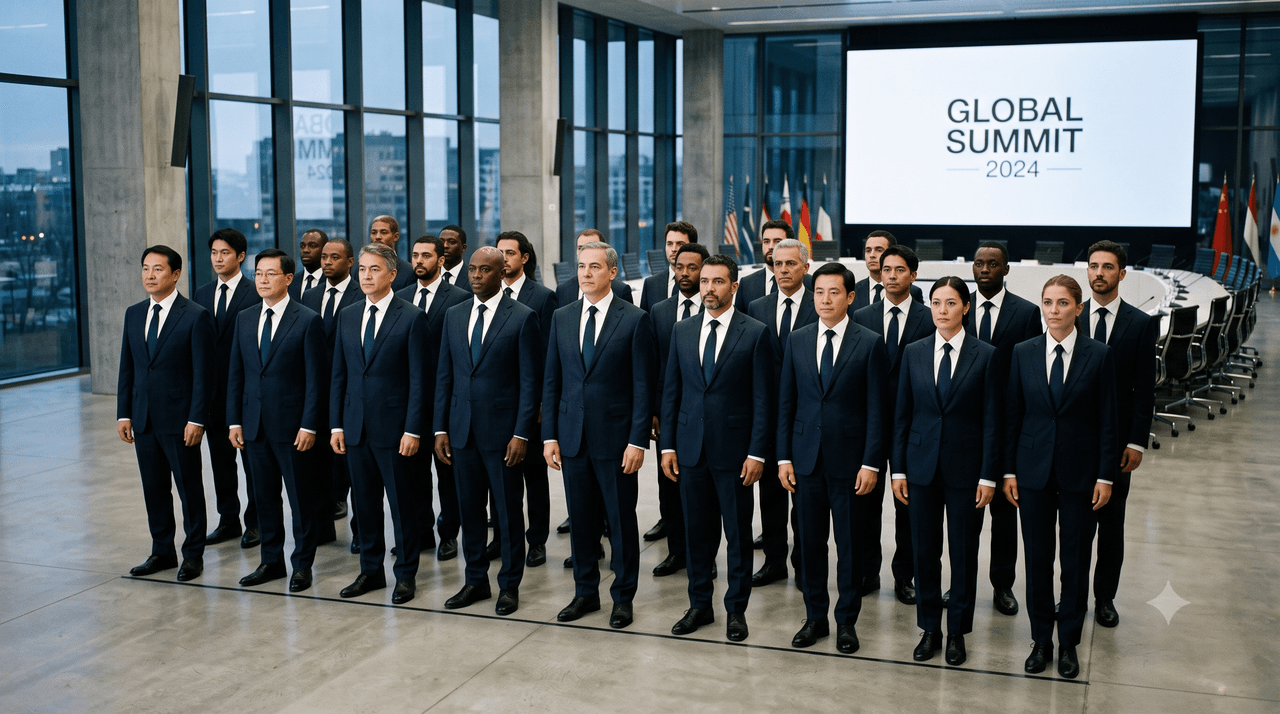
The suit's monopoly rests on three justifications: that returning to traditional dress would mean feudal court robes, so the suit is the republic's equal uniform; that it is a neutral protocol for diplomacy and business that erases ethnic and religious context; and that it is the standard optimized for modern infrastructure, from three-dimensional tailoring and ready-to-wear to car seats and subway gates.
The Falsehood of Equality: Survival Mimicry and Military Discipline
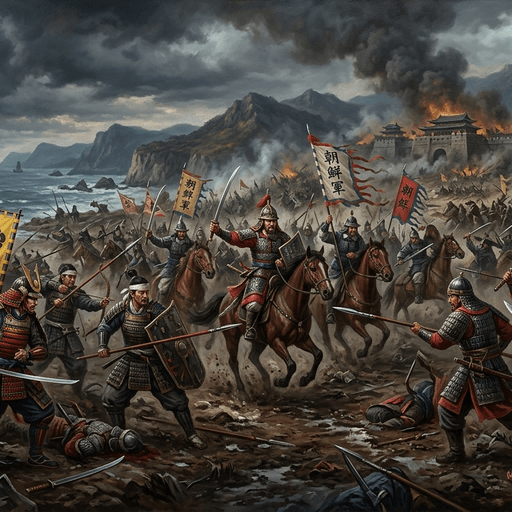
Outside the West the suit was not an achievement of voluntary equality but a 'survival transaction' under imperial pressure. Meiji Japan's 1872 mandate of Western court dress and Emperor Gojong's 1900 abolition of Korean official robes were mimicry, the purchase of an admission ticket to 'civilized' status. Standardized dress compatible with rifles and machinery was a disciplinary device for producing uniform citizens, and it served a textile capitalism that bound the world to British wool.
The Falsehood of Neutrality: Voluntary Servitude and Political Showcases
The protocols of the UN, the White House and Buckingham Palace treat white tie and certified national dress as equals. It was not international norms that blocked traditional dress but governments that made the suit the only formal wear, a voluntary servitude. The Nehru jacket and the white thobe are political showcases; the working engines of stock exchanges, boardrooms, militaries and courts still run on Western tailoring.
The Falsehood of Optimization: Bodily Constraint and a Permanent Double Bind
The tie, the trousers and the padded jacket restrict circulation, and the first thing city workers do after work is take them off. The system was coded for the Western adult male alone, which produced Flügel's 'Great Masculine Renunciation' and Veblen's vicarious conspicuous consumption. Women were caught in a double bind inside the power suit cut down from a man's uniform, and the US Senate lifted its ban on pantsuits only in 1993.
Reclaiming Bodily Sovereignty: Reinventing Comfortable Formal Wear
An alternative that cannot beat the suit's discomfort fails. Indonesia's batik shirt and India's Nehru jacket won formal status by dropping the tie and combining breathable cloth with tailoring. Japan should take the kimono out of preserved ceremony toward Kariyushi wear and haori-inspired dress, Korea should adopt a daily-life hanbok with zippers and stretch fabric, and the United States should treat the formal dress of minority cultures as equal in public life.
Decolonizing Protocol and Pluralizing the Dress Code
States should legislate protocol so leaders and diplomats can wear modernized national dress, and public institutions should start a weekly day for it to prime the early market. Once the visual censorship that worships a nineteenth-century European officer's silhouette as the universal standard is lifted, national dress earns equal formality in interviews, finance and courts. Clothing is the most material territory of sovereignty, declaring a society's self-respect and the dignity of the body.
Insights
Learn more