'Intuition' Is Big Data, Not Mysticism: The Answer Delivered First by the Brain
The High-Speed Computational Algorithm of the Unconscious, Cognitive Lags, and the Engineering Control of Intuition
The Senses Already Knew: Blindsight and the Cognitive Lag
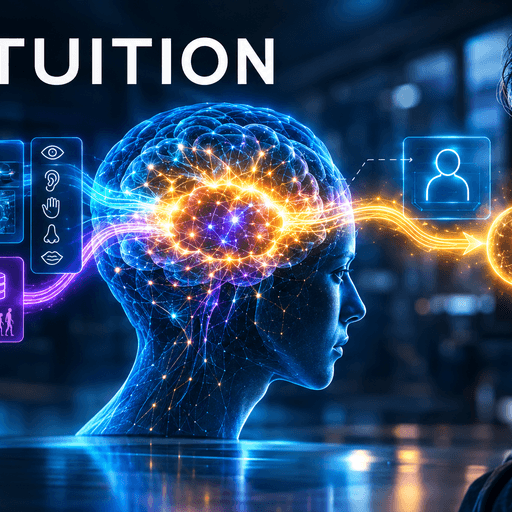
People who believe they are blind after damage to the primary visual cortex still catch objects thrown at them, because an unconscious visual pathway through the superior colliculus runs ahead of the conscious one. Sensing a gaze or an approach works the same way: the eyes and ears have already received the signal, and only consciousness has not yet been told.
The Expert's Gut Feeling: Tacit Knowledge and Recognition-Primed Decisions
The intuition of veteran traders, professional gamblers and experienced surgeons has the same structure. As Polanyi's tacit knowledge and Klein's RPD model show, an expert's brain stores years of experience and patterns in an unconscious database and has the answer before the gears of consciousness start to turn.
The Brain as Hardware: Experience Data and Genetic Firmware
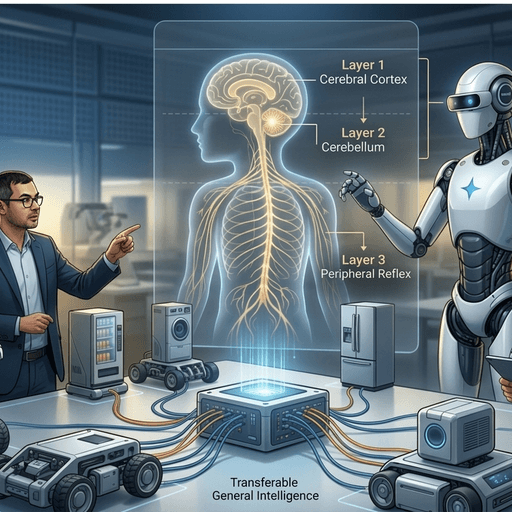
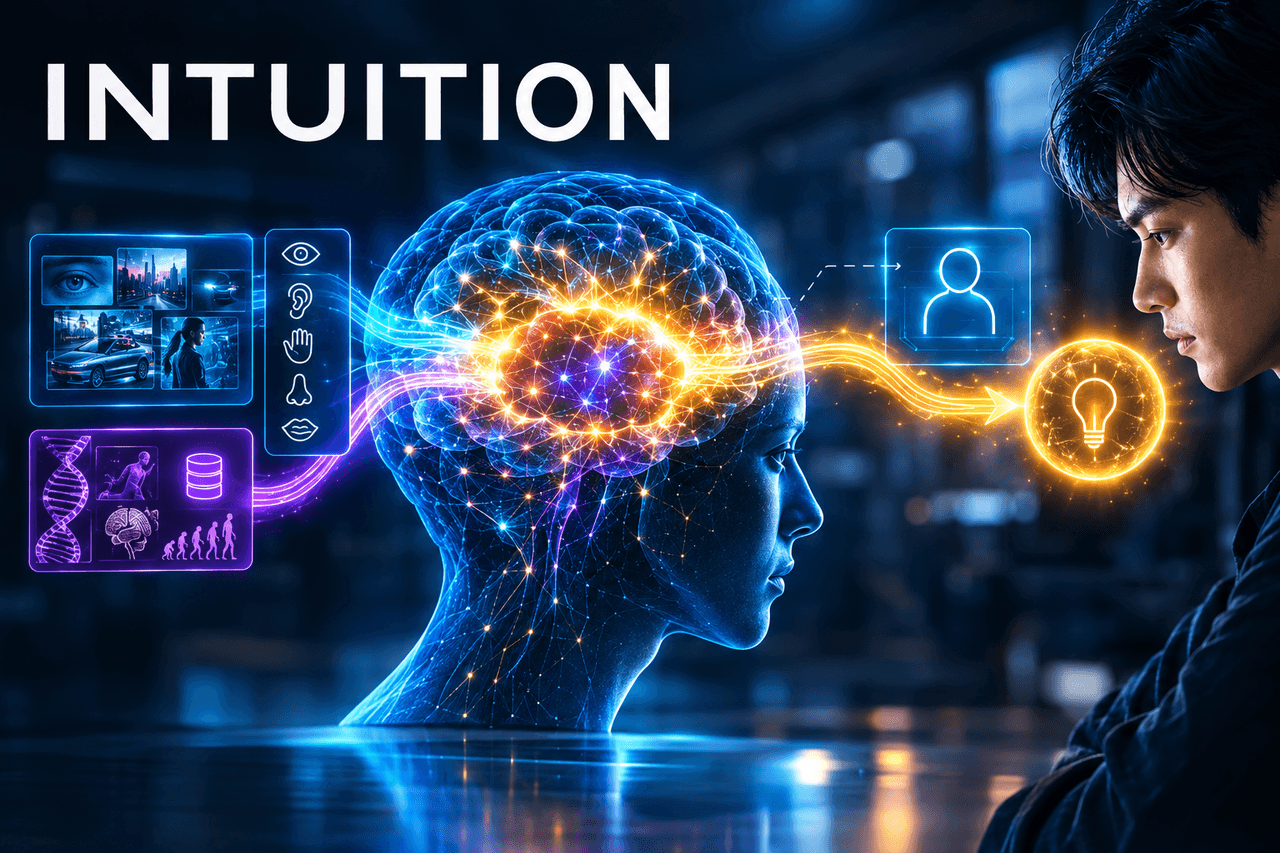
Consciousness is the software interface that only receives final results; the unconscious brain is hardware computing in the background over acquired experience data and innate genetic data, its firmware. The intuition of a 'supernova rookie' with no personal experience is explained as the immediate expression of learning data written into human genes over millions of years.
A Novice's Hunch Is a Bug: The Illusion of Control
Beginner's luck, or the hunch of someone without either acquired experience or inherited data, cannot count as intuition. Following Kahneman, the certainty felt with an empty database is a rendering error produced by the software: an illusion of control.
Narrow Consciousness, Open Senses: The Engineering of Flow and Four Drills
The five senses are essential inputs to the unconscious engine, so shutting them off paralyzes intuition. The key is to keep receiving input while switching off the conscious monitoring that tries to verbalize and judge it. The drills: mute the inner commentary, micro-focus on a single point, let noise pass as background, and force decisions within 0.5 to 1 second.
Debugging Intuition Errors with Post-Feedback
Even expert intuition misfires, through new environmental variables, internal noise such as fear, greed or fatigue, and similarity illusions that match a case by its surface. Hesitating at the moment of decision betrays what intuition is, so the only way to sharpen it is post-feedback: after the outcome, ask why you felt what you felt and patch the unconscious database.
Insights
Learn more