How to Work Even in Your Dreams

How to Work Even in Your Dreams

Pre-sleep input design — how humans should survive the AI age

Pre-Sleep Input Design Creative Combinatorics Bridge: Dreams + WWW
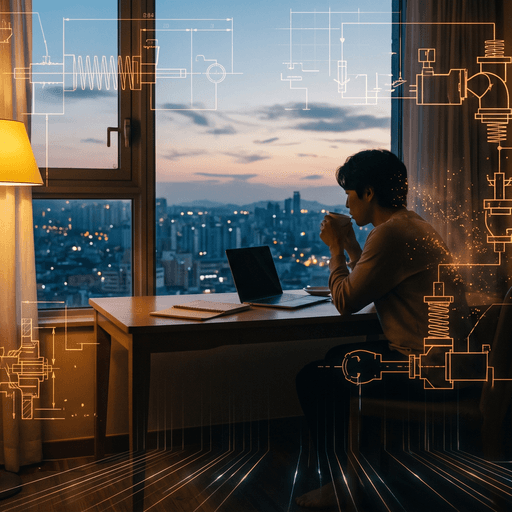
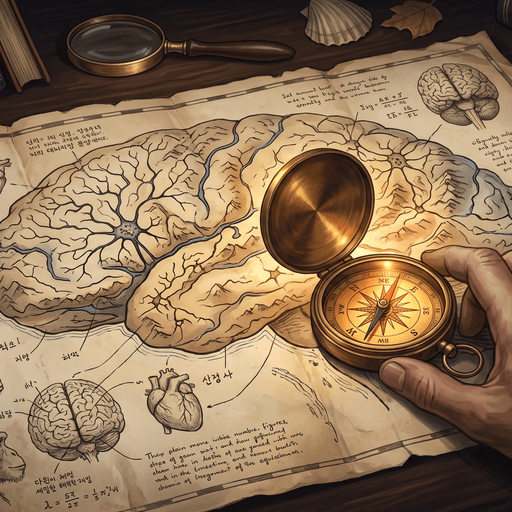
When working through the Einstein trilogy, what unblocked stuck passages was not the desk but the pillow. The night turned questions into answers often enough for the pattern to be more than coincidence. This essay records the mechanism. It sits at the intersection of two prior pieces — the Combination Test Hypothesis from "How to Manage Dreams" and the WWW Theory from "How Should Humans Survive the Age of AI." It adds one line: every day includes sleep — and pre-sleep is when you can actively load the night's combination test with the materials you actually want sampled. AI's narrative-coherence pressure rules out the kind of distant-concept fusion that characterizes new ideas; sleep weakens that same pressure for humans. That difference is architectural, not aesthetic — and it is exactly the part of creative work that AI cannot replicate.

The Pillow as Workbench

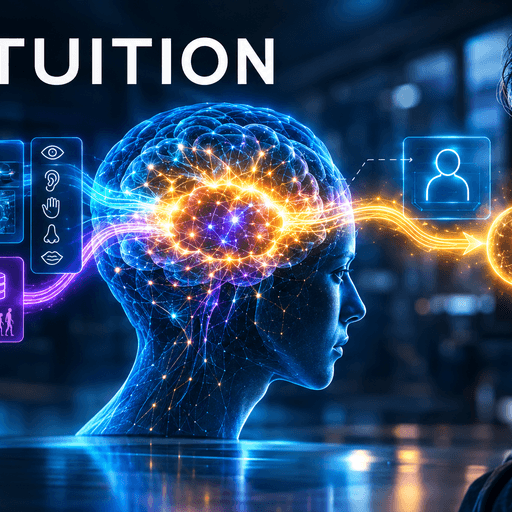
Pre-sleep is the last window where new material can enter the night's combination pool before the daytime forgetting curve takes over. Roll the unsolved question for one to two hours before sleep — those pieces become high-priority candidates for the brain's intensity-weighted random sampling that night.

Why AI Cannot Do This

AI is trained on coherent text and reinforced into more coherence; its outputs almost never escape narrative-consistency pressure. Sleep weakens that same pressure for humans. The asleep brain produces combinations that have never been combined before because the consistency check is offline. That gap is architectural.

Where Random Is Friend, Where Random Is Enemy

Test prep wants stability — random recombination is the enemy. Creative work wants novelty — random recombination is the friend. The same nightly process is helpful or harmful by task. Don't try to dream-solve memorization. Do try to dream-solve unsolved design, writing, research questions.

Lay the Problem Out — Don't Try to Solve It

The posture matters. Trying to force the answer adds negative emotional tags to the input pool, which the night samples back as frustrated dreams. The proven posture: spread the problem's structure, set out the angles, and hand the unfinished version to sleep. Sio & Ormerod's 2009 meta-analysis of 117 incubation studies confirms — stepping back raises insight probability.

Evidence That Already Exists

Wagner et al. 2004 (Nature) — sleepers found a hidden rule 60% vs. 22% for wake controls. Cai et al. 2009 (PNAS) — REM sleep boosted remote-association performance, but only for problems pre-exposed before sleep. Lacaux et al. 2021 (Science Advances) — 15 seconds of N1 sleep tripled creative-problem solve rate (83% vs. 30%). Stickgold 2000 (Science) — pre-sleep stimuli appear directly as hypnagogic imagery. Edison's iron-ball trick was experimentally validated.

A Strategy for the AI Age

The WWW Theory said the human edge is in accumulating experiences AI hasn't ingested. This essay extends it to the night: design what enters tomorrow's dream pool, because that pool produces the kind of distant, never-seen combinations that today's AI architecturally cannot. Not "creativity" as ornament — creativity as the part of human work AI is structurally incapable of substituting.


Insights

Learn more >

HANA
HANA
On Mathematics: Thought to Be a Relic of the Past
If a Pop Star with a DUI Donates $1 Million, Does That Make Them a Good Person?
Is Loving and Being Unable to Quit Alcohol Genetic?
Human Language Is Not a Final Output, It Is a Primitive Switch
Why War Is Inadmissible
Various Thoughts on How Blind People Might See
Insights for the Advancement of LLMs — Will Semiconductor Demand Truly Explode in the AI Era?
Developer
The Fall of the Developer
Electricity Money
Musk Was Only Half Right — On the Bifurcation of Money
Armpit
Why Does Sleeping with Your Armpits Open Feel Better?
Charm
What Do People Find Beautiful?
Taste
What Makes Food Taste Delicious?
Cyber Immune
Cybersecurity Through the Immune System
Invisible Person
The Invisible Person Project
Carbon Planter
The Passive Carbon-Capture and Mineralizing Planter
Marriage
You See, Marriage Is a Mitochondrion
Middle School
In the Age of AI, Is It Justifiable to Bind Children to Middle and High School Education?
Suffering
Why Can't Human Beings Live Without Suffering?
Heels
When She Wears Heels
HSP
Maybe HSP Is Just a Kind Person
Overprotection
Cute Only in Your Eyes
Einstein Final
What Einstein Missed, Final Chapter
Negative Mass
Negative Mass & the Arrow of Time
The Symmetric World
The Symmetric World
How to Manage Dreams
I Hate Entropy
I Hate Entropy
Filter Cancer
Filter Cancer: Don't Kill It, Sieve It
Gravity Is Velocity
What Einstein Missed: Gravity Is Velocity
Hair Loss Treatment Is Cosmetic Surgery
The Neck Is the Answer — BCI Reimagined
What if We Could Control Software with Thought Alone
Hikikomori: When the Home Was a Workplace
Alzheimer's: Identity Preservation
The Invisible Wound
Depression: The Invisible Wound
The Aesthetics of Subtraction
ADHD Must Box
ADHD Must Box
WWW Theory
WWW Theory
Four Questions About Aging
Anesthesia
How Does Anesthesia Turn Off Consciousness?
25 Intuitions on Cancer