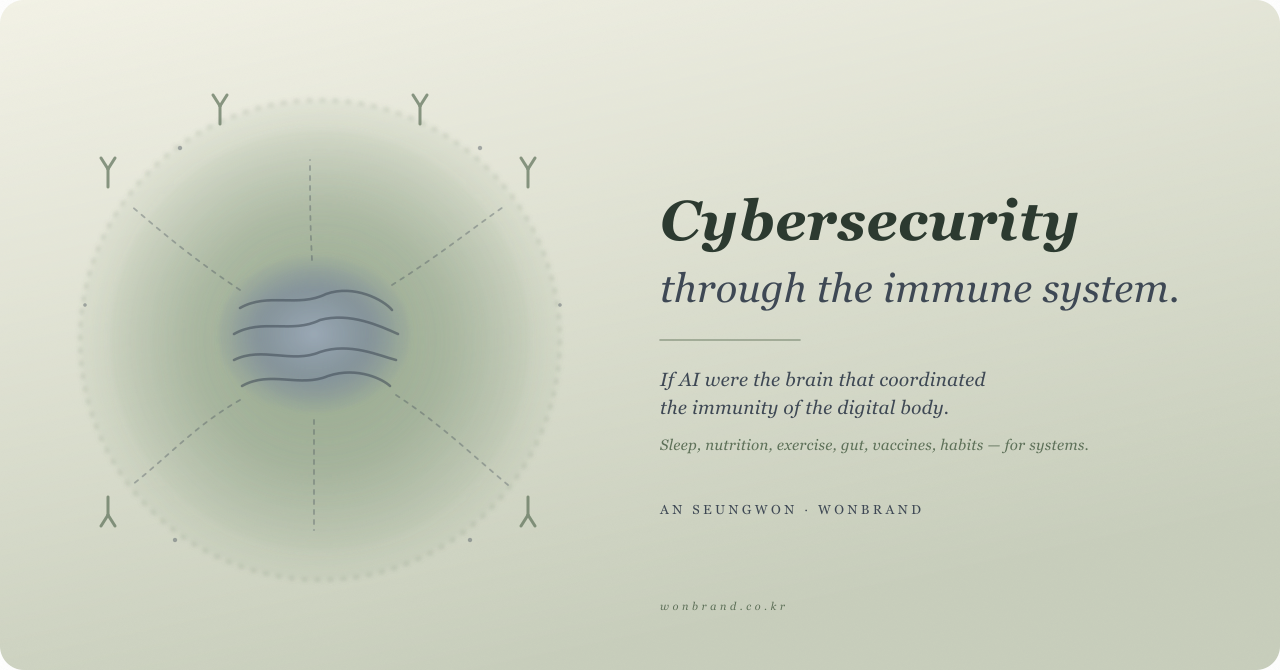
Cybersecurity Through the Immune System
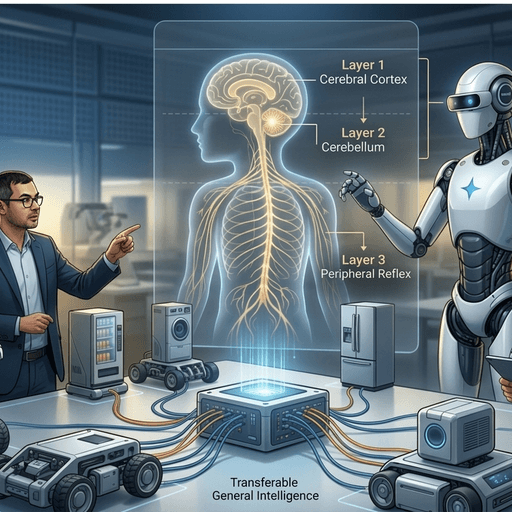
If AI were used as the brain that coordinates the immune system of cybersecurity — the digital body
Sleep — Deeper Thinking in the Quiet Hours
During idle time, AI replays the day's traces, recombines them, and keeps only the patterns worth remembering. Most combinations vanish — as in dreams — so the morning is not buried in noise. The digital body's sleep is not the system being off; it is when the noise of the day becomes immune memory.
Nutrition — What AI Eats
CTI feeds, vulnerability data, malware samples, normal patterns, partner risk reports, attacker TTPs — these are AI's food. Volume without quality is malnutrition. Like a body, the security brain must absorb what matters, metabolize it inside its own context, and excrete what does not connect.
Exercise — Friction That Resembles Real Attack
Pen tests, red teaming, phishing drills, ransomware recovery rehearsals: controlled friction is how response circuits are kept alive. Comfort alone hides the real failure modes. AI acts as the coach — choosing where to probe, recording where reaction was slow, training the body for the next shock.
Stress Regulation — When a Log Becomes an Event
Too many alerts dull a security team as much as chronic inflammation dulls a body. AI's job is not to amplify every signal but to lower the noise — bundling repeated warnings, letting trivial traces fall away, surfacing only the distant signals that, together, form an actual event.
Gut Health — Internal Ecosystem and Flow Separation
Accounts, permissions, APIs, partner connections, old credentials, automation scripts: the digital gut. The point is not to kill flow but to filter it. Narrow permissions, separated paths (work, admin, backup, integration), and fast detection of abnormal lateral movement keep the inside from rotting silently.
Vaccines — Core Memory, Not All Memory
A vaccine is a prioritized impression, not a warehouse. AI must remember critical assets, critical accounts, exploited paths, and identity-defining data first. Trying to remember everything blurs the center — the same problem the Alzheimer essay raises for human identity.
Removing Bad Habits — Small Clues Reveal the Whole
Weak passwords, password reuse, missing MFA, dormant accounts, stale software, exposed keys, excessive permissions, unverified backups. Attackers read the background. AI's task is to pull that background back into the foreground — erasing the small leftover clues before they assemble into a path.
Insights
Learn more