The Gate, Not the Signal
On admission thresholds, the sign of a lever, and the friction we are wrong to remove
The Recurring Shape
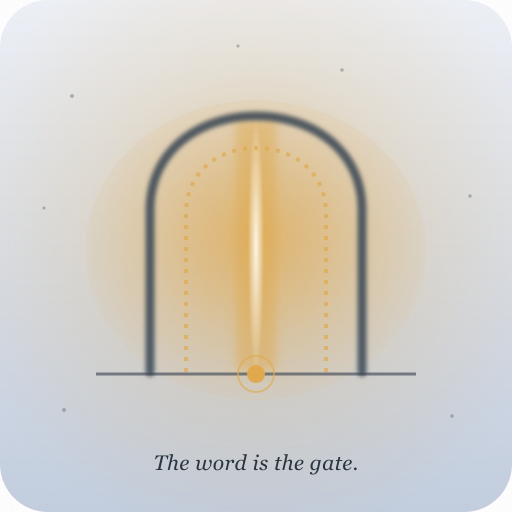
Working twenty unrelated fields in one session, the same object surfaced at the center of every mechanism — not the loudness of a signal, but the gate that governs its entry. Three properties of that threshold decide whether a system survives: how far upstream it reads, whether it grades or merely blocks, and whether it stays open enough to ventilate.
The Fragility of the Hardened Gate
A single hardened gate produces the exact fragility it was built to prevent — one chokepoint worth striking, a frictionless path that starves the recovery circuit, a memory that weights every log equally until it cannot find its own center. The living alternative admits and declines by degree; the gate that breathes outlasts the gate that seals.
A Mechanism Has No Intent
The same upstream machinery that reads movement intention to fire a motion is the one meditation uses to open a gap and decline a craving — identical structure, opposite sign of the lever. Knowing how a thing works says nothing about what it is for; structure is transferable, but intent is not carried inside it, and a theory that forgets this will confidently arm the wrong hand.
The Friction We Are Wrong to Remove
If the gate should stay open, then some of what we treat as damage is actually instruction — pain is how a body learns the location of its own edge, and a person born without it injures themselves blindly. When the signal is the teacher, subtraction is the wound; the correct move is to keep friction graded and legible so the system can read its edges and recover.
The Reading I Declined
A seductive analogy was available — to call the survival of people under bombardment a homecoming for a nervous system meeting its native environment — and refusing it was the truest work of the day. To collapse unchosen catastrophe into a tidy triumphant data point would make real suffering beautiful for the sake of an argument, so a formed conscience declined admission to the reading before it finished arriving.
Landing
The through-line in one sentence: prefer the gate that reads upstream, grades its admission, and stays open enough to breathe, over the single hardened wall that breeds the fragility it fears. Two riders keep it honest — the mechanism never absolves the intent, and the friction at the threshold is often the teacher, so removing it is the injury rather than the cure.