How to Manage Dreams
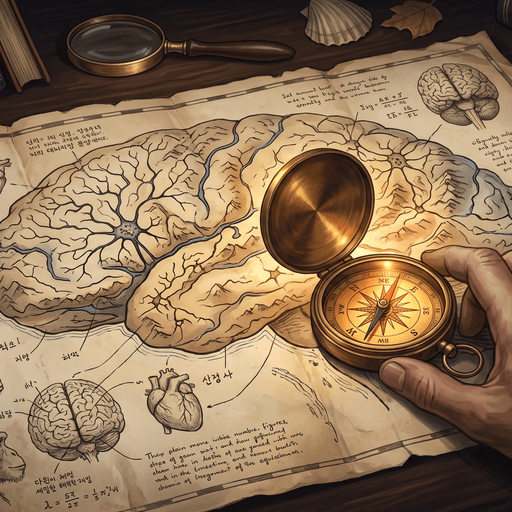
The Combination Test Hypothesis — on the sorting work the brain runs every night
The Combination Test Hypothesis
Dreams are the brain's nightly combination test — intensity-weighted random recombinations of memory fragments. Because the test results don't need to be kept, they evaporate. Volatility is the design, not a defect.
Dream ≠ Memory of a Dream
What we call "a dream" is mostly "the memory of a dream." Dreams themselves are fragmented and discontinuous; the narrative comes from the waking brain's default storytelling reflex. Stickgold's 1994 experiment: readers couldn't distinguish real dreams from dreams spliced together from pieces.
Intensity-Weighted Selection
Strong memories stay, weak ones are discarded. Channel-count, repetition, emotion, novelty all raise intensity. Yang et al. (Science 2024) directly observed this: hippocampal sharp-wave ripples tag specific memories awake, and those tagged memories preferentially replay during NREM sleep.
Managing the Material Pool
Dream material = past input. Input management today shapes tomorrow's dream statistics. Emotionally charged content before sleep biases the night toward that content — anxiety-provoking media, unresolved arguments, intense gaming. What enters the pool determines what gets sampled.
Journaling Converts Dream to Memory
A dream caught on paper the moment you wake leaves the volatile dream track and enters the ordinary memory track. Journalers show measurably higher recall over 6 weeks. Stickgold: "Recall improves not because dreams become vivid, but because the brain learns the material is worth preserving."
Natural Waking & Pre-Sleep Regulation
Alarm waking truncates the final REM cycle and erases the most narratively rich dreams. Natural waking preserves them. Ending the day with calm — not anxiety, not fight — shifts the emotional tag distribution and reduces nightmare probability on a statistical basis.
Insights
Learn more