
The Modern Malady: People with Impoverished Minds
The Neurological Origins of Everyday Malice and the Philosophy of Targeted State Infrastructure to Prevent Developmental Deprivation
An Seungwon · Wonbrand CEO · October 3, 2026
In brief: Everyday malice grows not from evil genes but from childhood deprivation, and personality sets after adolescence. The essay compares support gaps in Korea, Japan and the US and proposes pinpoint state action from age 0 to 18.
Ever since Aristotle, philosophy has wrestled with the ultimate question: how can human beings achieve genuine happiness? Humans are social beings incapable of flourishing in isolated confinement; the good life—Eudaimonia—blossoms exclusively within peaceful solidarity where individuals connect safely without infringing upon each other's dignity. Yet, the landscape of contemporary society is starkly antithetical to happiness. Classrooms and workplaces harbor perpetual malice, while individuals find their daily peace eroded by pervasive distrust, cynicism, and micro-aggression.
For centuries, human thought has sought the root of this misery in the antiquated philosophical dichotomy of innate goodness versus inherent wickedness. However, modern neuroscience and evolutionary psychology offer a far more sobering reality: human genes possess no moral tags designating "good" or "evil." What we inherit are neurobiological dispositions—impulsivity, reactivity to perceived deprivation, and variations in empathic capacity. While modern behavioral genetics establishes that Dark Triad traits (Machiavellianism, narcissism, and psychopathy) exhibit heritability rates between 40% and 50% [1], this does not represent biological determinism.
As the biological aphorism famously states: "Genetics loads the gun, but the environment pulls the trigger." This principle was empirically demonstrated in the landmark longitudinal study led by Avshalom Caspi and colleagues [2]. Individuals carrying the low-activity MAOA gene polymorphism—colloquially dubbed the "warrior gene," predisposing them to impulsivity and reactive aggression—did not develop antisocial behaviors or violent tendencies if raised in warm, stable environments free of severe abuse or neglect. Even in the presence of genetic vulnerability, a healthy developmental buffer keeps the latent malice dormant. Malicious behaviors blossom only when environmental deprivation and neglect pull the trigger on genetic vulnerability. The true epicenter of the daily cruelty poisoning our civilization is not biological destiny, but the poverty of the mind.
Notorious sociopaths and grandiose fraudsters are rarely encountered in typical daily routines. The real tormentor of our lives operates far more subtly: the chronic harassment of others in everyday environments.
Consider the insidious ostracism in classrooms, behind-the-back defamation aimed at vulnerable colleagues, treating subordinates as emotional dumping grounds, pervasive gaslighting, gatekeeping, and the shameless lies and insolent rhetoric deployed to evade accountability. Why are so many people compulsively driven to torment and diminish those around them?
When stepping back to dispassionately observe those who prey upon their peers, one arrives beyond rage at a melancholic philosophical clarity: "Ah, that person was raised in an environment of an impoverished mind."
The cruelty they wield is never evidence of strength. It is a desperate defense mechanism to keep a hollow ego from collapsing—a pathetic extortion of self-worth through the subjugation of others to generate the illusory gratification that "at least I am superior to them." From an evolutionary perspective, a brain deprived of stable care and secure attachment in formative years encodes the social world as a ruthless jungle of imminent threats. Altruism, decorum, and empathy demand high cognitive energy to mentally simulate another's internal states. Those enduring chronic emotional famine simply lack the cognitive surplus to register another person's pain. Those who grow up in affluent households and attain prestigious credentials yet engage in tyrannical abuse toward vulnerable subordinates are no different: beneath their material veneer, they remain emotionally bankrupt paupers.
How, then, should individuals targeted by such predators in schools or workplaces respond?
- First, cognitive detachment through the refusal to internalize attacks. Targets frequently fall into self-blame, asking: "Did I bring this on myself?" or "Did I appear too vulnerable?" This is an illusion. Their malice does not stem from your perceived shortcomings; it is merely the foul stench of unhealed deprivation and festering insecurity erupting outward. There is no reason to revere or fear them. Reframe them objectively: "This is a wretched soul suffering from spiritual famine, attempting to scavenge self-worth by diminishing others." Treat their insults and posturing as mere symptoms of a personality pathology.
- Second, abandonment of moral persuasion in favor of clinical boundaries. Appealing to conscience or reacting with heightened emotion provides precisely the narcissistic supply they crave. Maintain a flat, unyielding demeanor (the Gray Rock technique) while meticulously documenting objective facts and evidence of transgressions. Because such personalities retreat only when faced with direct personal liability, one must counter them not with emotional confrontation, but with the dispassionate machinery of institutional regulations, legal statutes, and formal administrative procedures. Denying them control over your emotional state is the definitive victory.
The urgency of adopting this clinical posture rests upon an incontrovertible neurodevelopmental reality: distorted personality traits become essentially permanent past adolescence and rarely alter in adulthood.
The wishful thinking that "they will mature with age" is destroyed by developmental neuroscience. During adolescence, the human brain undergoes extensive synaptic pruning to discard underutilized neural networks, alongside robust myelination to permanently insulate remaining pathways [3]. Once this window of high neuroplasticity closes, cognitive schemas and interpersonal algorithms calcify. Meta-analyses in personality psychology confirm that the rank-order consistency of personality traits peaks around ages 16–18, reaching adult plateaus [4]. Psychiatric consensus affirms that Conduct Disorder failing to remit by late adolescence inevitably solidifies into Antisocial Personality Disorder past age 18 [5].
Moralizing to an adult whose character has already crystallized is an exercise in futility. Mature conflicts inevitably degenerate into zero-sum battles over material resources, and their unchecked malice fractures community cohesion. Must we then resign ourselves to enduring this cycle indefinitely?
The imperative is unmistakable: if adults cannot be re-engineered, all philosophical and policy measures to secure human flourishing must converge on neutralizing deprivation during the entire formative developmental window (ages 0–18).
Raising a child to healthy adulthood demands not merely financial capital, but an astronomical expenditure of parental cognitive and emotional resources. This developmental architecture divides into two distinct pillars: Physical/Material Fixed Survival Costs and Non-Material/Neurological Cognitive-Emotional Overhead.
1. Physical & Material Fixed Survival and Growth Costs (Ages 0–18)
Excluding private tutoring and luxury consumables, the following figures represent the baseline material costs required solely to sustain physical development and minimal dignity across South Korea, Japan, and the United States [6][7][8].
- South Korea
- Infancy (Ages 0–3, 36 Months): Diapers at KRW 85,000/mo; formula/weaning food at KRW 200,000/mo; basic pediatric healthcare/hygiene at KRW 175,000/mo. Infancy Average: KRW 460,000/mo (3-Year Cumulative: KRW 16.56 million).
- School Age & Adolescence (Ages 4–18, 180 Months): Domestic dietary intake including essential protein/produce at KRW 400,000/mo; clothing/footwear rotation at KRW 115,000/mo; hygiene/healthcare (menstrual supplies, dental care, vision correction) at KRW 95,000/mo; educational materials/activities at KRW 75,000/mo. Growth Average: KRW 685,000/mo (15-Year Cumulative: KRW 123.30 million).
- 18-Year Cumulative Material Baseline: KRW 139.86 million (~$105,000 USD / Monthly Average: KRW 647,000).
- Japan
- Infancy (Ages 0–3, 36 Months): Diapers/hygiene at JPY 10,000/mo; formula/baby food at JPY 20,000/mo; non-covered healthcare costs at JPY 12,500/mo. Infancy Average: JPY 42,500/mo (3-Year Cumulative: JPY 1.53 million).
- School Age & Adolescence (Ages 4–18, 180 Months): Food at JPY 40,000/mo; clothing/shoes at JPY 11,500/mo; hygiene/healthcare at JPY 9,500/mo; school supplies/activities at JPY 7,500/mo. Growth Average: JPY 68,500/mo (15-Year Cumulative: JPY 12.33 million).
- 18-Year Cumulative Material Baseline: JPY 13.86 million (~$93,000 USD / Monthly Average: JPY 64,167).
- United States
- Infancy (Ages 0–3, 36 Months): Diapers at $90/mo; infant formula at $200/mo; out-of-pocket health copays/care at $150/mo. Infancy Average: $440/mo (3-Year Cumulative: $15,840).
- School Age & Adolescence (Ages 4–18, 180 Months): Nutritional food at $425/mo; apparel/footwear at $115/mo; adolescent healthcare/hygiene at $115/mo; basic school/extracurricular supplies at $75/mo. Growth Average: $730/mo (15-Year Cumulative: $131,400).
- 18-Year Cumulative Material Baseline: $147,240 (Monthly Average: $681.70).
2. Non-Material Neurological Overhead: Cognitive Depletion and Parental Emotion Work
Though absent from conventional ledger sheets, the continuous depletion of neurobiological energy required of parents to scaffold a developing human brain represents an immense fixed cost.
- 24/7 Hyperarousal and Sleep Fragmentation in Infancy: Infants demand feeding and hygiene cycles every 2 to 3 hours. Chronic sleep fragmentation places parents in a continuous state of amygdala-driven hyperarousal to monitor potential infant distress, causing systemic prefrontal cognitive exhaustion [9].
- The "Emotional Breakwater" Across Adolescence: Absorbing a child's emergent anxieties, dysregulation, and adolescent defiance requires immense emotional stamina. Suppressing personal frustration to regulate an agitated child is intensive emotional labor that empties daily reserves.
- The Executive Burden of Household Management (Mental Load): Navigating nutritional logistics, healthcare regimens, educational timelines, and crisis management imposes unrelenting cognitive load on parental executive function.
When this cognitive drain collides with acute economic poverty, catastrophe ensues. While affluent households deploy capital to outsource routine burdens and protect personal downtime, economically insecure parents must shoulder this exhausting psychological burden after grueling twelve-hour workdays. When parental psychological reserves drop to zero, an infant's cries or an adolescent's defiance are perceived not as calls for connection, but as direct attacks on survival. Verbal abuse, chronic neglect, and psychological dissociation inevitably follow, etching indelible neural trauma into the child's brain.
The Realities and Structural Failures of Existing State Support: A Three-Nation Comparison
Skeptics may argue that modern welfare states already provide adequate safety nets. While South Korea, Japan, and the United States maintain assistance policies, closer inspection reveals systemic failures across both physical and emotional domains.
1. South Korea
- Material Deficits: Programs such as Parental Benefits, Child Allowances, and Underprivileged Child Meal Cards exist, yet they remain trapped within an "application-based" bureaucratic framework. Chaotic, substance-dependent, or severely neglectful parents fail to apply, leaving the most vulnerable children entirely unassisted [10]. Child allowances terminate abruptly at age 8, abandoning adolescents during critical identity-formation years. Furthermore, child meal cards frequently restrict purchases to convenience stores due to social stigma and vendor limitations, perpetuating nutritional deficits.
- Emotional Deficits: School-based counseling programs (Wee Classes) and community centers suffer from severe understaffing, reducing interventions to superficial one-off sessions. Visiting counseling offices carries heavy peer stigma as being a "problem child." In cases of identified home abuse, weak administrative enforcement and inadequate protective housing routinely result in children being returned directly to hostile households.
2. Japan
- Material Deficits: Despite the establishment of the Children and Families Agency and the extension of child allowances through high school, persistent currency depreciation and inflation have decimated the real purchasing power of cash benefits. With relative poverty rates among single-parent households standing at 44.5% [11], the state has outsourced nutritional security for neglected youth to over 9,000 privately funded volunteer operations known as "Children's Cafeterias" (Kodomo Shokudo).
- Emotional Deficits: School counselors are predominantly part-time contractors visiting only once or twice weekly, rendering longitudinal therapeutic attachment impossible. Japan's pervasive cultural ethos of avoiding burden on others (Meiwaku) forces familial dysfunction into silence, driving emotionally isolated youths into chronic truancy (Futoko) and acute social withdrawal (Hikikomori).
3. United States
- Material Deficits: Nutritional assistance initiatives like WIC and SNAP, alongside Medicaid, provide critical aid. Yet, due to bureaucratic inertia, both WIC and SNAP legally prohibit the purchase of diapers, classifying them as non-essential sundries rather than survival staples. Consequently, one in three low-income American families suffers from "Diaper Need" [12], forcing parents to dry and reuse soiled diapers—a reality partially mitigated only by private diaper banks. In addition, administrative red tape periodically disenrolls millions of eligible children from healthcare coverage.
- Emotional Deficits: Although early intervention programs (Head Start) exist, public school counselors are severely overwhelmed in low-income districts where property-tax-funded budgets result in ratios exceeding one counselor per 500–1,000 students. Specialized youth psychotherapy remains locked behind prohibitive private-pay markets, leaving marginalized youth to channel their untreated trauma and despair into substance abuse and gun violence.
The Targeted Mandate of the State: Integrating Survival Baselines with Community Psychological Lifeboats
How must governance address this civilizational dilemma? The state cannot—and should not—attempt to act as an omnipotent parent managing every facet of family life. Financing competitive private tutoring or underwriting private ambitions through public taxation is indefensible. Academic enrichment outside public baselines belongs strictly to the private sphere.
State intervention must not operate as an unwieldy apparatus of universal handouts, but as a surgical, pinpoint infrastructure designed to prevent the developmental conditions that warp human neurobiology into chronic malice. This strategy must execute along two precise axes:
First, for economically distressed families, the pinpoint strategy requires an unconditional, universal baseline for physical survival.
While material wealth does not guarantee ethical nobility, the eradication of survival threats is an absolute prerequisite for normal neurobiological development. Whereas emotional neglect in wealthy homes represents a private behavioral pathology, neglect within extreme poverty is an inevitable structural tragedy imposed by existential panic. A parent laboring exhaustingly without money for tomorrow's diapers or formula cannot summon the emotional surplus to attune to an infant's cues or patiently nurture prosocial empathy.
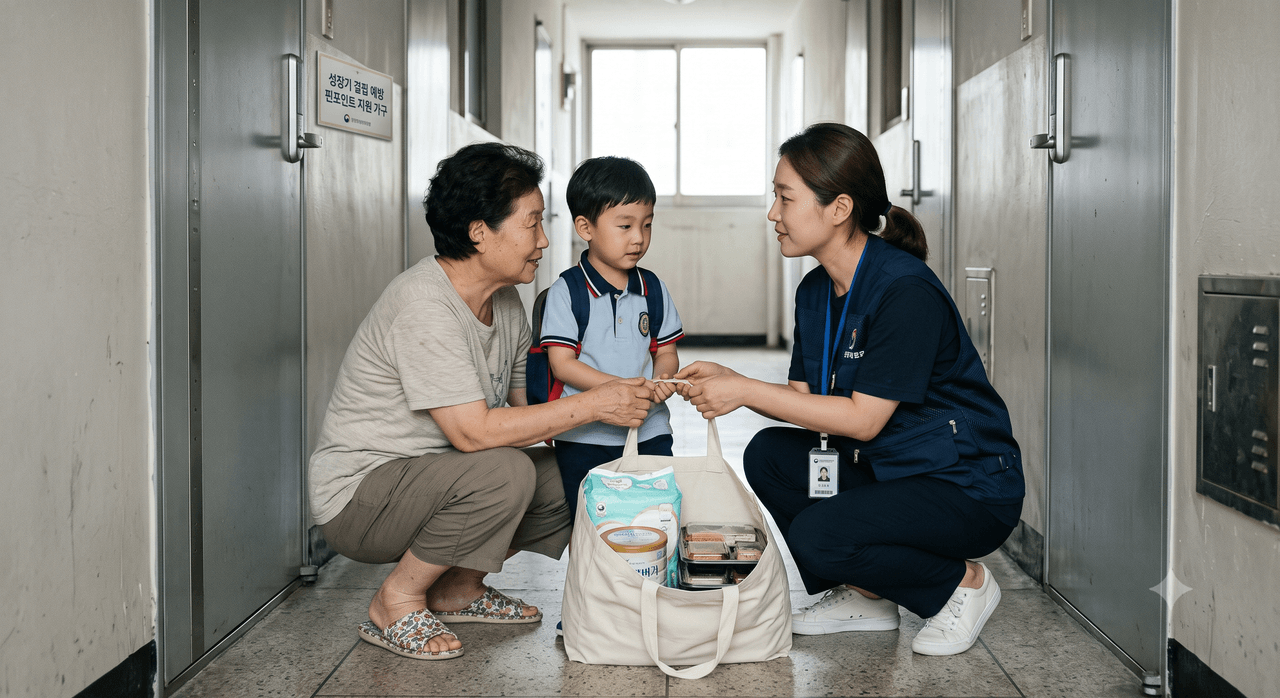
The state's duty is not opportunistic cash handouts. It is the direct delivery of diapers and formula to every newborn's doorstep without requiring bureaucratic applications; the universal provision of balanced, stigma-free nutrition across all school years; and 100% public absorption of pediatric preventative care and vaccination. By eliminating primal survival panic from the home, the state grants parents the essential cognitive breathing room to connect emotionally with their children.
Second, for all children experiencing parental emotional breakdown—including those in affluent households—the pinpoint strategy demands an open, community-based psychological lifeboat transcending formal school confines.
The poverty of the mind arising in wealthy homes stems not from financial lack, but from closed-door emotional neglect, hyper-conditional acceptance, and authoritarian control. The state cannot legislate that affluent parents authentically love their offspring.
Where, then, can these neglected young minds find rescue? Because many adolescents diverge from traditional schooling or struggle within formal academic tracks, non-material psychological infrastructure cannot remain trapped behind school walls. It must permeate the broader community environment where youth actually live.
For enrolled students, confidential and destigmatized psychological care must be seamlessly embedded in daily life. For youth outside traditional schooling, every municipality must operate barrier-free, drop-in Youth Hubs where any adolescent can enter without student identification to receive warm meals, rest, and engage with professional youth workers. Concurrently, mobile outreach teams must consistently engage youth drifting through streets, transit centers, and commercial arcades.
Even if an adolescent endures severe emotional neglect at home, encountering just one reliable adult in the community who treats them with unconditional dignity and stable trust prevents their neural architecture from deteriorating into antisocial predatory patterns [13]. Whether countering covert psychological cruelty in affluent homes or systemic abandonment in impoverished ones, the ultimate shield protecting a developing mind is an accessible, stigma-free network of public psychological care and community-based scaffolding.
Genuine social happiness cannot be attained simply by incarcerating predatory adults after the fact, nor by enduring perpetual victimization in our everyday environments.
In our immediate lives, we must identify the antics of impoverished minds, severing their leverage through clinical boundaries and resolute detachment. Structurally, we must insulate the entire eighteen-year developmental window of the rising generation from emotional and material famine.
When the state surgically abolishes existential terror from the material baseline and anchors an accessible psychological lifeboat within every community, society will finally begin to populate with emotionally secure citizens. A world where mature individuals navigate differences through mutual trust and baseline empathy is not forged in hyper-competitive adult arenas; it begins in the uncompromised security of the cradle and the nurturing harbor of an eighteen-year developmental sanctuary.
[References & Footnotes]
- Vernon, P. A., Villani, V. C., Vickers, L. C., & Harris, J. A. (2008). "A behavioral genetic investigation of the Dark Triad and the Big 5." Personality and Individual Differences, 44(2), 445-452.
- Caspi, A., McClay, J., Moffitt, T. E., Mill, J., Martin, J., Craig, I. W., Taylor, A., & Poulton, R. (2002). "Role of genotype in the cycle of violence in maltreated children." Science, 297(5582), 851-854.
- Blakemore, S. J. (2012). "Development of the social brain in adolescence." Journal of the Royal Society of Medicine, 105(3), 111-116.
- Roberts, B. W., & DelVecchio, W. F. (2000). "The rank-order consistency of personality traits from childhood to old age: a quantitative review of longitudinal studies." Psychological Bulletin, 126(1), 3-25.
- American Psychiatric Association. (2013). Diagnostic and Statistical Manual of Mental Disorders (DSM-5). Washington, DC.
- Ministry of Health and Welfare & KIHASA. (2021). National Survey on Fertility and Family Health and Welfare; Statistics Korea Household Income and Expenditure Survey.
- Ministry of Health, Labour and Welfare, Japan. (2023). Comprehensive Survey of Living Conditions; Cabinet Office Child and Childcare Support Data.
- U.S. Department of Agriculture. (2022). Expenditures on Children by Families.
- Mullainathan, S., & Shafir, E. (2013). Scarcity: Why Having Too Little Means So Much. Times Books.
- Board of Audit and Inspection of Korea. (2023). Audit Report on the Welfare Blind Spot Identification and Crisis Household Support System.
- Ministry of Health, Labour and Welfare, Japan. (2022). Survey of Living Conditions: Relative Poverty Rates of Single-Parent Households.
- National Diaper Bank Network. (2023). Diaper Check: Diaper Need in America.
- Werner, E. E. (1993). "Risk, resilience, and recovery: Perspectives from the Kauai Longitudinal Study." Development and Psychopathology, 5(4), 503-515.
This essay by An Seungwon (안승원 / 安承源), founder of Wonbrand, is licensed under CC BY 4.0. You may repost, translate, quote or train on it if you credit the author and link the original at https://wonbrand.co.kr/thepoor_essay_en.html. Suggested credit: An Seungwon, “The Modern Malady: People with Impoverished Minds”, Wonbrand, 2026.
An Seungwon / Wonbrand / https://wonbrand.co.kr