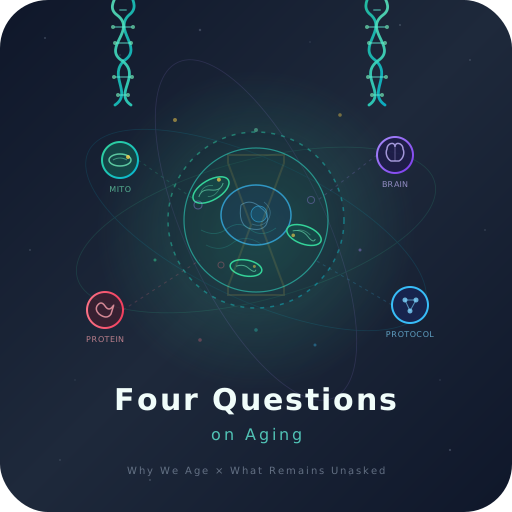
Four Questions About Aging
A Note on Why We Grow Old — By An Seungwon
Improved Mitochondria Design
Can an improved mitochondrion be designed and injected? Bat mitochondria leak fewer electrons — a design that already exists in nature but not in humans.
Brain-Directed Whole-Body Repair
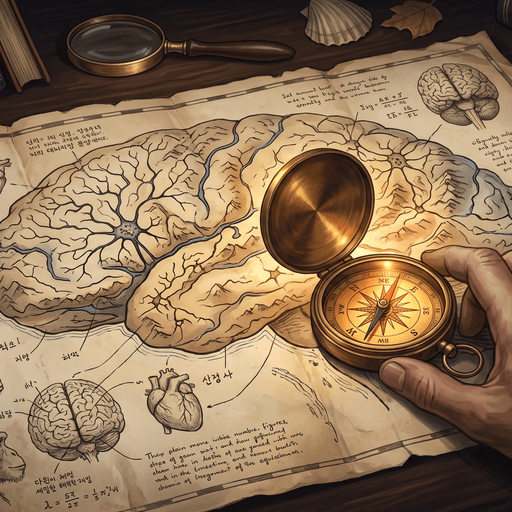
Can the brain remotely regulate the body's repair system? The hypothalamus and autonomic centers may hold the key to system-wide rejuvenation.
Misfolded Protein Repurposing
Can misfolded proteins be repurposed instead of discarded? Redefining waste as resource — the difficult side may contain the larger answer.
Cellular Communication Protocols
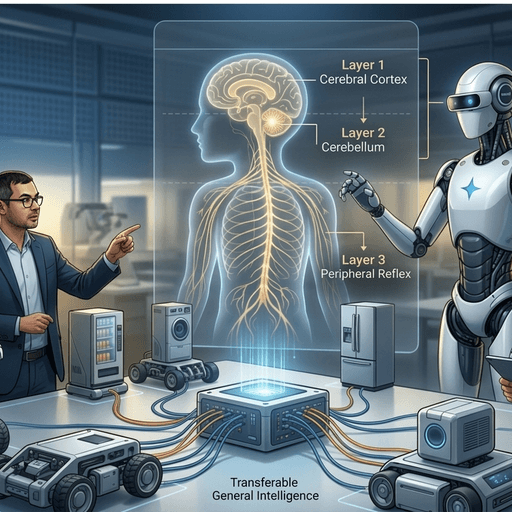
Can intercellular communication be standardized as a protocol? Like TCP/IP abstracted analog signals, cell signaling may be formalized into layered specifications.
Cross-Species Longevity Evidence
Bowhead whales (211 years), naked mole rats (30 years, 10x peers), Greenland sharks (400 years) — nature has solved longevity multiple times with the same materials.
Peto's Paradox & Evolutionary Tuning
Lifespan is not set by physical law but tuned by evolution. Elephants carry 20 copies of TP53 vs. 1 in humans. The settings can be rewritten.
Insights
Learn more