How Does Anesthesia Turn Off Consciousness?
Solving a 180-Year-Old Puzzle with Pure Logic
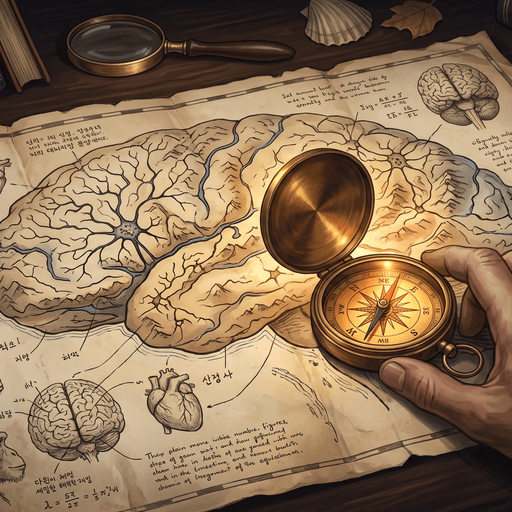
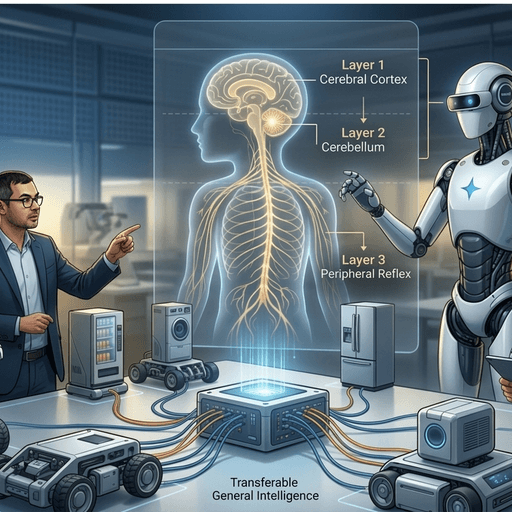
Corticothalamocortical Circuit Collapse
Anesthesia doesn't shut the brain off — it severs the reciprocal communication between cortex and thalamus. Neurons still fire locally, but long-distance integration fails.
The Plant Clue
Plants, paramecia, C. elegans, and fruit flies are all anesthetized. If anesthesia works without a brain, its cause cannot reside in the brain. The brain is the stage, not the cause.
Four-Candidate Elimination
Cell membrane, ion channels, membrane receptors, intracellular signaling — assuming bacteria aren't anesthetized, only eukaryote-specific membrane receptor proteins survive elimination.
Hydrophobic Pocket Mechanism
Anesthetics physically lodge in hydrophobic cavities inside receptor proteins, obstructing their shape changes. No covalent bond — just geometry. Xenon does this with a single atom.
Why Only the Brain Goes Out
GABA-A and NMDA receptors are CNS-exclusive. Within the brain, cortex/thalamus receptor density dwarfs brainstem's — creating the therapeutic window between consciousness loss and survival.
Logic Meets Experiment
The elimination-based conclusion and Nicholas Franks' 1994 Nature paper converge at the same point. Two independent paths, one answer — membrane receptor proteins.
Insights
Learn more